

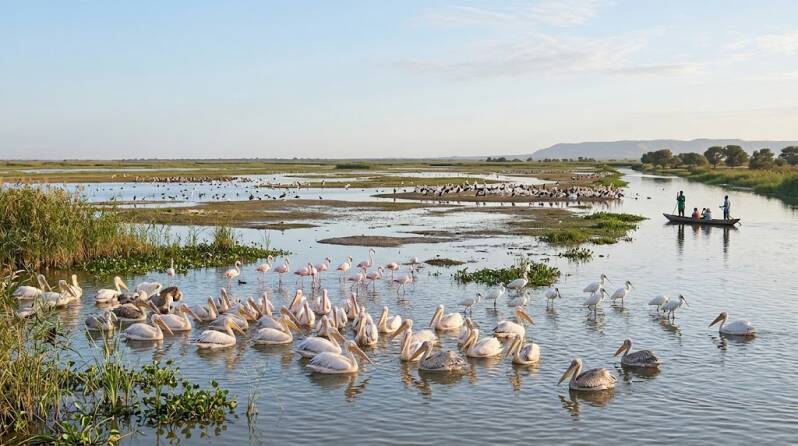
Djoudj National Bird Sanctuary
Established in 1971 and recognised as a UNESCO World Heritage Site in 1981, Djoudj National Bird Sanctuary is one of the world's most important wetland ecosystems. Located in the Senegal River Delta, its seasonal floodplains and brackish lakes provide sanctuary for more than three million migratory waterfowl between November and April.
Key Birds and Wildlife
Djoudj is celebrated for its waterbirds. Look for Great White Pelicans, Greater Flamingos, African Spoonbills, herons, egrets, cormorants and ducks, alongside migrant waders on the sanctuary’s shallow wetlands. The mix of resident and seasonal birds makes each visit rewarding.
Wetlands and Seasonal Floodplains
Shallow lakes, reedbeds, channels and seasonally flooded plains create a rich mosaic of feeding and roosting habitat. Water levels change through the year, shaping which areas are accessible and where birds gather. A guided visit helps you explore the wetlands while keeping a respectful distance from resting and nesting birds.
Best Time to Visit Djoudj
The main birding season is generally November to April, when many migratory waterbirds are present. Early morning is a good time to watch birds as they feed and move between roosts. Conditions and sightings vary with rainfall and water levels.
Planning your birdwatching visit
Before travelling, discuss your dates, target species and photography interests with Lamin. Ask about current access, transport from Saint-Louis, the route through the sanctuary and what is included in your quotation.
Bring binoculars, sun protection and water, and protect camera equipment from dust and spray. Follow your guide’s advice around colonies and observe birds without disturbing them.