

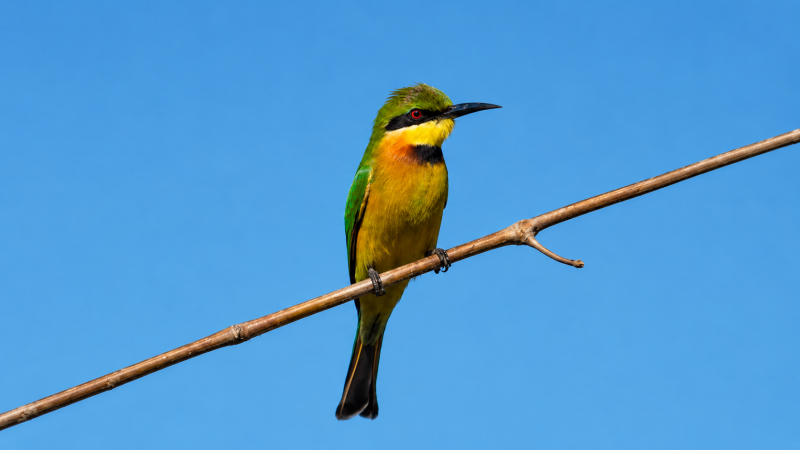
How to Spot the Little Bee-eater in The Gambia
The Little Bee-eater brings bright colour to a birdwatching walk in The Gambia. Look for a small green bird with a yellow throat, a dark band beneath it and warm buff underparts. Males and females look alike. Its slender black bill and habit of watching for insects from a low, exposed twig are useful clues.
Best Locations to Find the Little Bee-eater
Open Country and Wetland Edges
Search grassy areas with scattered bushes, especially near water. The rice fields near Kotu Creek, where the bird in our tour gallery was photographed, offer a useful starting point. Scan low branches along field margins and watch for short flights out to catch passing insects. Lamin can choose suitable stops according to current conditions.
Behaviour & Photography Tips
Little Bee-eaters catch flying insects, including bees and wasps, and often return to a perch to handle their prey. Stay still at a respectful distance and let the bird resume feeding. A clear view of a regular perch can provide opportunities for portraits and take-off photographs. Keep away from nesting banks and avoid blocking the birds' flight paths.
Contact Lamin to plan a birding or photography tour, or explore more Must-See Birds in The Gambia.