

Bronze-winged Courser in The Gambia
Rhinoptilus chalcopterus
See this bird with local guide Lamin: 7-day Gambia birding tours from £1,250 per person, day trips from £45. Book a Gambia birding tour
Overview
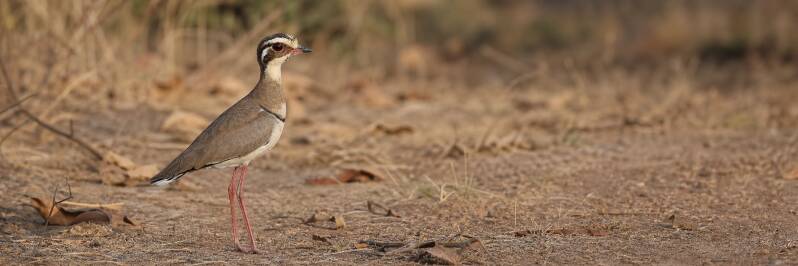
The Bronze-winged Courser is an elegant, mainly nocturnal ground bird of open African woodland. Seeing its metallic wing sheen in a vehicle’s soft light is a special inland birding experience.
Identification
It has long legs, a large dark eye, patterned head and breast, and cryptic brown upperparts. In flight or display, bronze-green secondary feathers provide the feature behind its name.
Habitat and behaviour
Coursers favour open woodland, burnt ground, tracks and sparsely vegetated savannah. They run swiftly after insects and become most active from dusk through the night, often freezing when detected.
Birdwatching in The Gambia
Potential habitat occurs in inland areas, including open country around Tendaba and farther east. Encounters are unpredictable and depend on careful night driving or walking where access is permitted.
Field note
Use light sparingly, never pursue a bird and give it room to move away. Lamin Jobaate can conduct a responsible evening search while explaining how to distinguish coursers from Senegal Thick-knees and nightjars.
Plan your birdwatching tour: Ask Lamin Jobaate about a private itinerary for this species and The Gambia’s other outstanding birds.
Explore the best birding locations in The Gambia
Field tips for seeing the Bronze-winged Courser
The Bronze-winged Courser is mainly active at dusk and during the night, when it feeds on insects in open woodland and on bare ground. By day it rests motionless in the shade of a bush or small tree, where its patterned plumage makes it remarkably hard to see. Most sightings come either from a guide who knows the current daytime roosts or from searching tracks after dark.
Look for a tall, upright courser with a bold face pattern, a dark breast band and long legs; in flight the violet-tipped flight feathers give the species its name. It is most often found during the dry season. If you are shown a roosting bird, keep a respectful distance and avoid flushing it, so it can stay in place for other visitors. A short evening drive with a spotlight can also produce views of nightjars and other night birds.
Where to look for Bronze-winged Courser in The Gambia
These sites have suitable habitat and fit well into a planned birding itinerary:
- Tendaba: mangrove creeks, freshwater pools, savannah and the River Gambia
- Kiang West National Park: wooded savannah, scrub and open inland tracks
- Bansang Quarry & Wassu: sandy banks, dry savannah and upriver farmland
These are places with suitable habitat, not guaranteed sightings. Season, tide, water level and recent local activity all affect where a bird is found.
Want to see the Bronze-winged Courser with Lamin? Ask about dates for a tailored trip, or see the 7-Day Gambia Birding & Photography Tour from £1,250.