
Protecting The Gambia’s birds and wild places
We believe unforgettable birdwatching and effective conservation belong together. Our work supports birds, restores habitats, shares knowledge and involves the communities who live alongside these remarkable places.
Conservation is at the heart of what we do
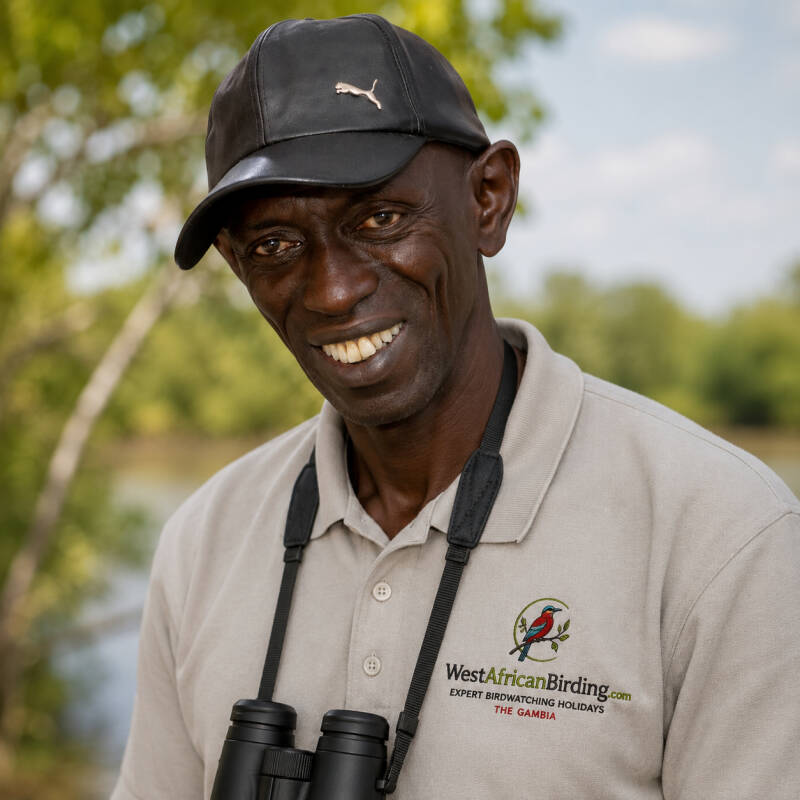
West African Birding is led by Lamin Jobaate, Executive Director of the West African Bird Study Association (WABSA), the BirdLife International partner organisation in The Gambia. Lamin has more than 30 years of experience in bird-conservation projects across the country.
His work connects field research with practical habitat protection, environmental education, community participation and responsible ecotourism. By helping visitors experience The Gambia’s birdlife, we also encourage greater understanding of why these species and habitats must be protected.
Conservation succeeds when local knowledge, scientific evidence and community involvement work together. That principle guides our approach to wetlands, mangroves, threatened vultures, bird monitoring and education.
Our conservation priorities
Restore habitats
Support the recovery of mangroves and wetlands that provide feeding, breeding and sheltering areas for birds and other wildlife.
Protect threatened birds
Respond to threats including poisoning, illegal use, habitat loss and disturbance, with particular attention to Hooded Vultures.
Build knowledge
Strengthen bird recording, ringing, breeding observations and cooperation between Gambian and international researchers.
Involve communities
Work with the people who use and care for natural resources so that conservation supports both wildlife and local livelihoods.
Conservation through people
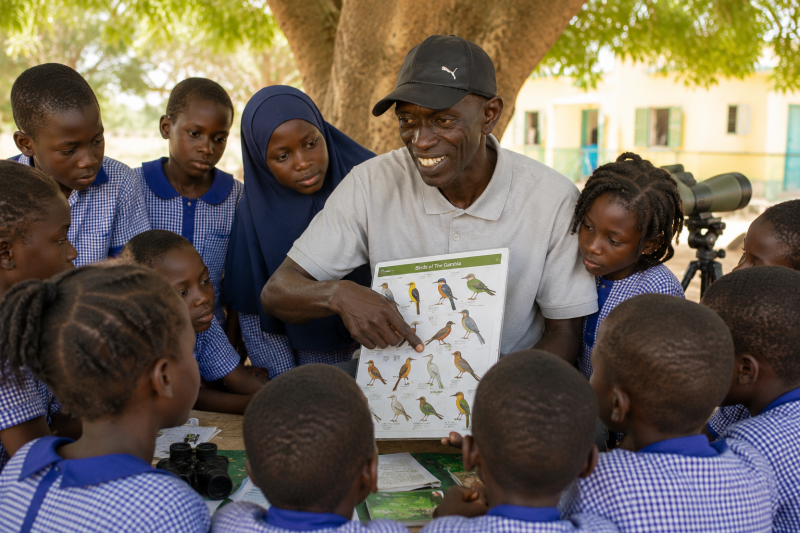
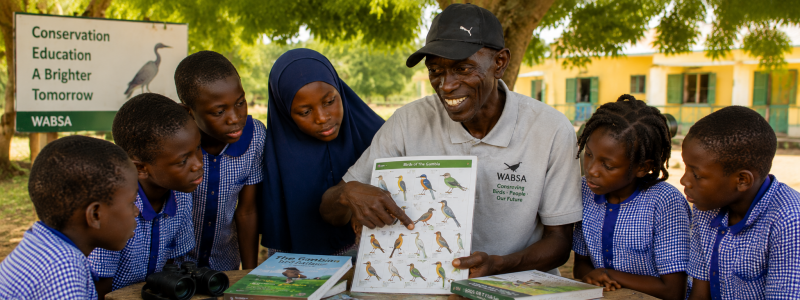
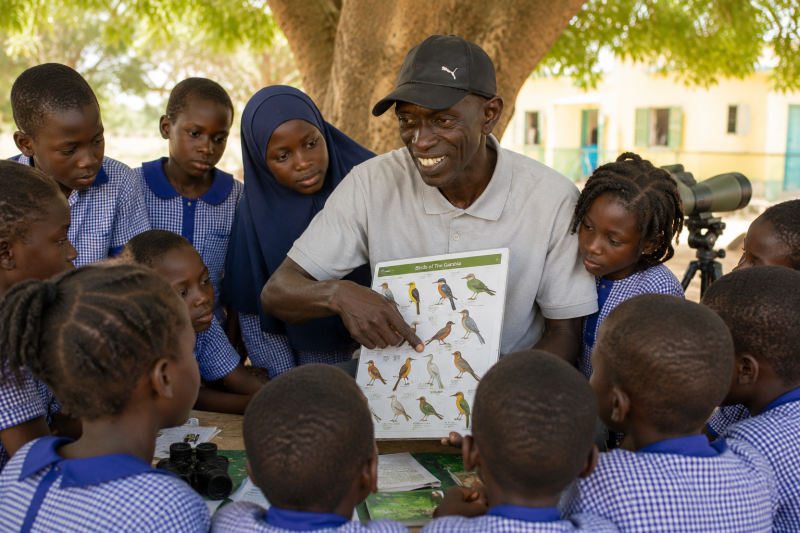
Protecting birds cannot be separated from the needs and knowledge of people. WABSA’s published programme includes school bird clubs, community bird sanctuaries, public awareness, research and collaboration with government on important conservation sites.
Responsible birdwatching contributes by supporting local guides, transport providers, accommodation and communities. It also gives visitors the opportunity to learn about the conservation challenges facing the places they enjoy.
A consistent theme in Jobaate’s public work is partnership: local communities, young people, researchers, government, NGOs and visitors all have a role. WABSA’s environmental education and ecotourism work turns birdlife into a source of knowledge, pride and sustainable economic opportunity, while its regional collaborations recognise that migratory birds cross borders and must be protected across the Atlantic Flyway.
How visitors can help
- Choose experienced local guides and locally provided services.
- Keep a respectful distance from nests and sensitive wildlife.
- Avoid disturbing birds for photographs or recordings.
- Stay on established paths where requested.
- Never remove plants, animals, feathers, eggs or other natural material.
- Share useful bird records with recognised recording projects.
- Ask before photographing local people or community activities.
- Support credible conservation and environmental-education initiatives.
Conservation leadership documented since 2012
Lamin’s conservation work has been recognised nationally and internationally for more than a decade.
In September 2012, The Point interviewed Lamin in his role as Executive Director of the West African Bird Study Association. The interview followed his return from the Rutland Birdfair in the United Kingdom, where he had presented WABSA’s mangrove-restoration work and promoted birdwatching and conservation in The Gambia.
Lamin explained how restoring mangroves creates valuable habitat for resident and migratory waterbirds, provides fish-spawning areas and benefits the communities that depend on healthy wetlands. He also described WABSA’s work with schools, young people, government agencies and conservation partners.
Read Abdou Rahman Sallah’s original 2012 interview in The Point: https://thepoint.gm/africa/gambia/article/environment-ecotourism-and-the-gambias-birdlife
Inspire young people
Encourage learning through school bird clubs, public awareness and practical opportunities to experience nature.
Promote responsible tourism
Use birdwatching and photography to create appreciation, local opportunity and a strong economic reason to conserve wildlife.
Restoring mangroves and wetlands
Mangroves provide feeding and sheltering habitat for resident and migratory birds. They also create fish-spawning areas, protect shorelines and support the natural resources on which local communities depend.
In a direct interview, Lamin described WABSA’s mangrove-restoration work and reported that more waterbird species were recorded in restored areas than before restoration began.
The approach places local participation at its centre, combining practical planting with education, community stewardship and sustainable use.
Research, ringing and bird recording
Good conservation depends on reliable information. Lamin has contributed to efforts to strengthen bird observations and recording in The Gambia. In 2017, he announced WABSA’s support for a voluntary national bird recorder and plans for an annual report for the Department of Parks and Wildlife Management.
He was also involved in the commencement of the Gambian Ringing Scheme in 2020. The programme trained Gambian conservationists in mist-netting, safe extraction, bird handling, recording and ringing techniques.
Lamin’s own published conference work includes three years of observations of Hooded Vulture breeding behaviour, following activity from nest preparation through to the fledging of young.
At a glance
RoleExecutive Director, West African Bird Study Association (WABSA)CountryThe GambiaFocusBird conservation, mangrove and wetland restoration, environmental education, ecotourism, research and advocacyRecent priorityPreventing Hooded Vulture poisoning and strengthening national response capacityName noteWABSA uses “Lamin Jobaate”. Some official and media sources use “Lamin Jobarteh”; both appear to refer to the same WABSA director.
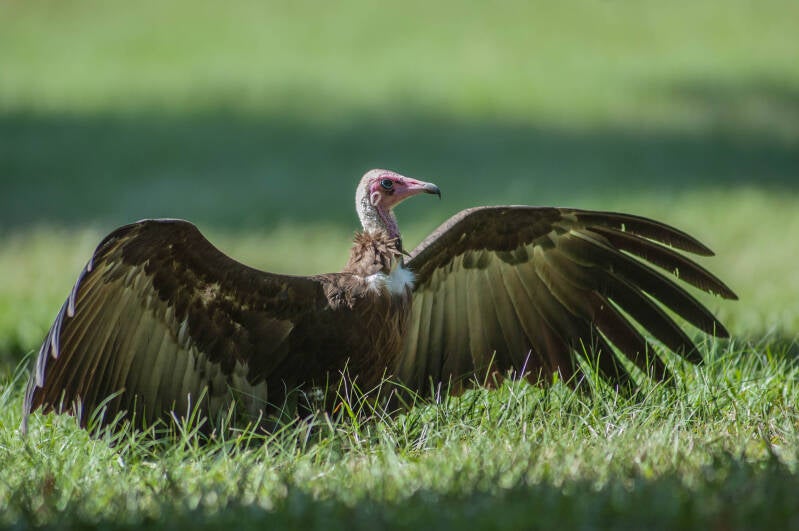
Hooded Vulture in The Gambia. Photo: Pete Richman / Wikimedia Commons, CC BY 2.0.
Responding to the Hooded Vulture crisis
Hooded Vultures are Critically Endangered, and The Gambia remains one of their important strongholds. Jobaate has helped bring together WABSA, government agencies, traditional-medicine stakeholders and regional partners to tackle threats including poisoning and the use of vulture parts. In 2024 he described a programme combining research, advocacy, ecotourism, public awareness, habitat restoration and stronger wildlife protections.
Following mass-poisoning incidents in 2025, WABSA partnered with the Gambian Department of Parks and Wildlife Management, BirdLife International, the Convention on Migratory Species Raptors MOU and the Vulture Conservation Foundation on specialist training. Participants developed the foundations of a national vulture action plan, practised poisoning-response and forensic procedures, and fitted a Hooded Vulture with a GPS tracker.
“It was inspiring to witness the dedication and passion … aimed at addressing the critical issue of vulture poisoning in our region.”
— Lamin Jobaate, CMS Raptors MOU, 2025
Lamin Jobaate is Executive Director of the West African Bird Study Association (WABSA), a Gambian conservation NGO founded in 1994 and identified by WABSA as BirdLife International’s partner in The Gambia. His work connects bird conservation with healthier wetlands, community participation, education and nature-based tourism.
Under Jobaate’s leadership, WABSA has reported work across community bird sanctuaries, national parks, wetland reserves and other important habitats. Its programme includes bird research, school bird clubs, public awareness, collaboration with government on Important Bird and Biodiversity Areas and Key Biodiversity Areas, and projects in communities including Marakissa, Brufut, Kartong, Bambali, Kutirr and Sifoe.
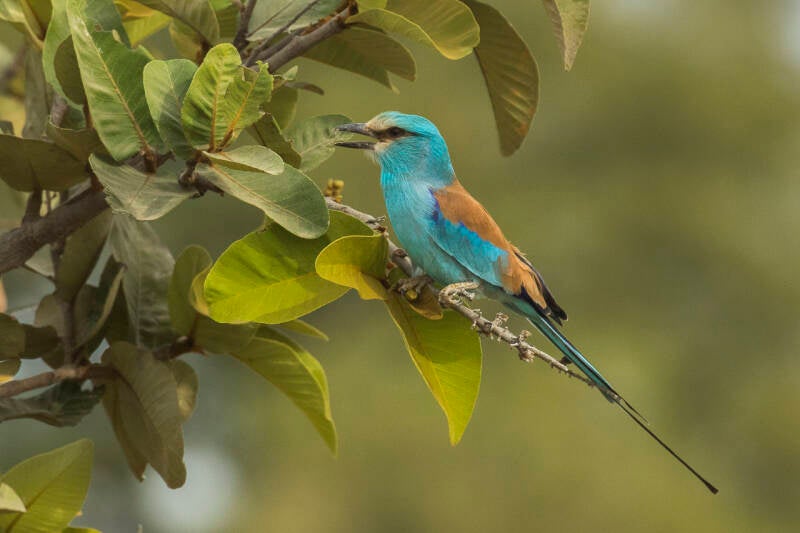
Abyssinian Roller in The Gambia. Photo: Francesco Veronesi / Wikimedia Commons, CC BY-SA 2.0.
Experience birdwatching that supports conservation
Discover The Gambia’s extraordinary birds with local knowledge, responsible guiding and a deeper understanding of the habitats they depend on.