

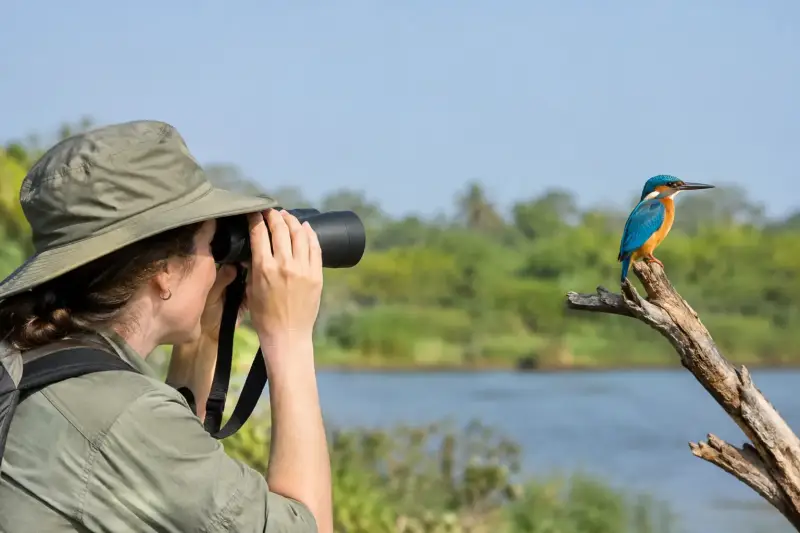
A Gambia birding holiday can begin before breakfast with a Western Bluebill moving through riverside cover, then shift to raptors above open woodland by late morning. That variety is the country’s great strength. Within relatively short driving distances, you can work coastal lagoons, mangroves, dry savannah, gallery forest and upriver wetland, building an impressive West African list without spending every day on the road.
For visitors from the UK, The Gambia is also an approachable first birding destination in West Africa. English is widely spoken, the winter climate is warm, and the country’s compact shape makes it possible to combine serious target-birding with an unhurried, comfortable holiday. The best trips do not simply chase a long list, however. They are paced around the birds you most want to see, the habitats they need and the time required to enjoy a good encounter properly.
Why Gambia birding rewards careful planning
The Gambia follows the River Gambia inland from the Atlantic coast, creating a remarkable concentration of habitat in a small area. Coastal scrub and rice fields can produce colourful weavers, bee-eaters, sunbirds and rollers. The mangroves and creeks hold herons, kingfishers and waders. Further upriver, the landscape opens into woodland, savannah and riverine forest where many of the region’s more sought-after species become realistic targets.
This range is why a single hotel-based excursion can be rewarding, while a multi-day itinerary can be genuinely transformative. A half-day outing near the coast may suit someone keen to add a few West African specialities to a family holiday. A dedicated birdwatcher looking for Egyptian Plover, African Finfoot, White-backed Night Heron or Pel’s Fishing Owl needs more time, careful timing and usually an upriver stay.
There is a trade-off. Trying to cover every habitat in a short visit can turn an enjoyable holiday into a sequence of rushed checklists. It is often wiser to identify priority species first, then build the route around them. That gives the guide freedom to revisit a productive site, wait quietly when conditions are right, or change the order of the day after local information from the field.
Habitats and birds to look for
Coast, wetlands and mangroves
The coastal belt is an excellent place to start. Sites around Kotu, Tanji and Kartong offer a mix of lagoon, marsh, scrub and beach, often with plenty of activity in the first hours after sunrise. White-faced Whistling Duck, Black Crake, African Jacana, Pied Kingfisher and colourful bee-eaters are among the birds that can make an immediate impression.
Winter visitors add another layer. Palearctic migrants use the area in significant numbers, and familiar European species can appear beside birds that are entirely new to most British birders. Waders, warblers and raptors are often part of the day, although exact numbers and species naturally vary with weather, water levels and date.
Mangrove channels reward patience. A slow boat journey can be particularly valuable for Malachite, Blue-breasted and Giant Kingfishers, while the shadows and overhanging vegetation may produce mangrove specialists that are easily missed from the bank. For photographers, early light and a stable, carefully positioned boat matter as much as the species list.
Forest, woodland and savannah
The country’s woodland and forest patches hold some of the birds that make a Gambian trip memorable. Abuko Nature Reserve, for example, can produce close views of hornbills, turacos, flycatchers and forest kingfishers, but it rewards a quiet approach rather than hurried walking. Bird activity can be intense, then suddenly subtle, and an experienced guide will recognise calls and movement that are easy to overlook.
In open country, rollers, shrikes, bee-eaters and starlings give the landscape colour, while raptors may be visible from the vehicle or during a stop beside a track. Senegal Batis, Northern Puffback, Violet Turaco and Green-headed Sunbird are examples of birds that can feature depending on the route and habitat conditions. Some are straightforward when active; others demand repeated listening and careful positioning.
Upriver birding changes the feel of the trip. Here, the river becomes central to the experience, and the most productive sessions may take place from a boat, along a quiet track or at a small waterside camp. This is where a focused itinerary can create opportunities for Egyptian Plover on sandbanks, African Finfoot in secluded channels and Pel’s Fishing Owl in suitable riverine forest. None should be promised as a certainty - wild birds and water conditions set the terms - but expert local field knowledge greatly improves the odds.
When to plan your birding holiday
For many visitors, November to April is the most comfortable period for birding in The Gambia. Rain is unlikely, tracks are generally easier to travel and the mix of resident birds and Palearctic migrants offers excellent variety. December to February is especially popular with UK birdwatchers seeking warm weather during the northern winter.
That does not mean every date offers the same experience. Early in the dry season can retain greener vegetation and different water conditions, while later months may concentrate birds around remaining wet areas. Photographers may prefer a programme with longer stays at a few well-lit locations rather than moving daily in pursuit of maximum species totals. Birders focused on a particular target should plan around its habitat and known seasonal behaviour, not simply choose the most convenient flight date.
Early starts are part of successful birding here. The first few hours after dawn are often the most active and comfortable, followed by a slower middle of the day, then another useful session later on. A good itinerary leaves space for rest, lunch and reviewing sightings, particularly for guests who do not want every day to feel like an endurance test.
Choosing the right pace and itinerary
A scheduled small-group holiday suits travellers who enjoy sharing sightings, want dates and logistics arranged in advance, and appreciate the value of a small party. Keeping groups small is not merely a comfort issue. It makes it easier to hear calls, position everyone for a view and respond when a bird appears briefly in dense cover.
Private Gambia birding is often the better choice for couples, friends, photographers and birders with a defined wish list. It allows the route, accommodation standard, walking distance and daily rhythm to be adjusted from the outset. Someone hoping for a gentle wildlife holiday can concentrate on accessible coastal sites and relaxed forest trails. A committed lister may choose extra upriver nights and earlier departures in pursuit of difficult species.
Mobility should be discussed honestly before booking. Some productive locations involve uneven ground, narrow paths, boat transfers or a fair amount of standing while watching a forest edge. Many enjoyable birding experiences can be adapted, but clear information in advance helps ensure the itinerary is right rather than merely possible.
What a local guide adds in the field
A field guide is useful; a guide who knows the local calls, seasonal movements, access routes and recent conditions is something different. In West African habitats, birds are frequently heard before they are seen. A guide may stop for a faint whistle in thick foliage, notice a change in river level affecting a sandbank, or know when a particular track is worth trying after recent rain.
That local knowledge also supports a more considerate experience. Sensitive birds should not be pressured for a photograph, and playback, where used at all, must be restrained and appropriate. At West African Birding, Lamin Jobaate’s more than 30 years of field experience inform a patient, target-species-led approach: the aim is not to rush guests past birds, but to give them a real chance to watch, photograph and understand them.
Your spending can also have value beyond the trip itself when conservation and community benefit are built into the business. Healthy wetlands, forests and village-managed landscapes are not background scenery. They are the reason the birds remain here.
Bring binoculars you know well, sun protection, a refillable water bottle and light clothing in muted colours. More importantly, bring a short list of priority birds and an honest sense of your preferred pace. The most rewarding Gambian morning is often the one where there is enough time to stop, listen and let the habitat reveal what is already there.
Add comment
Comments