

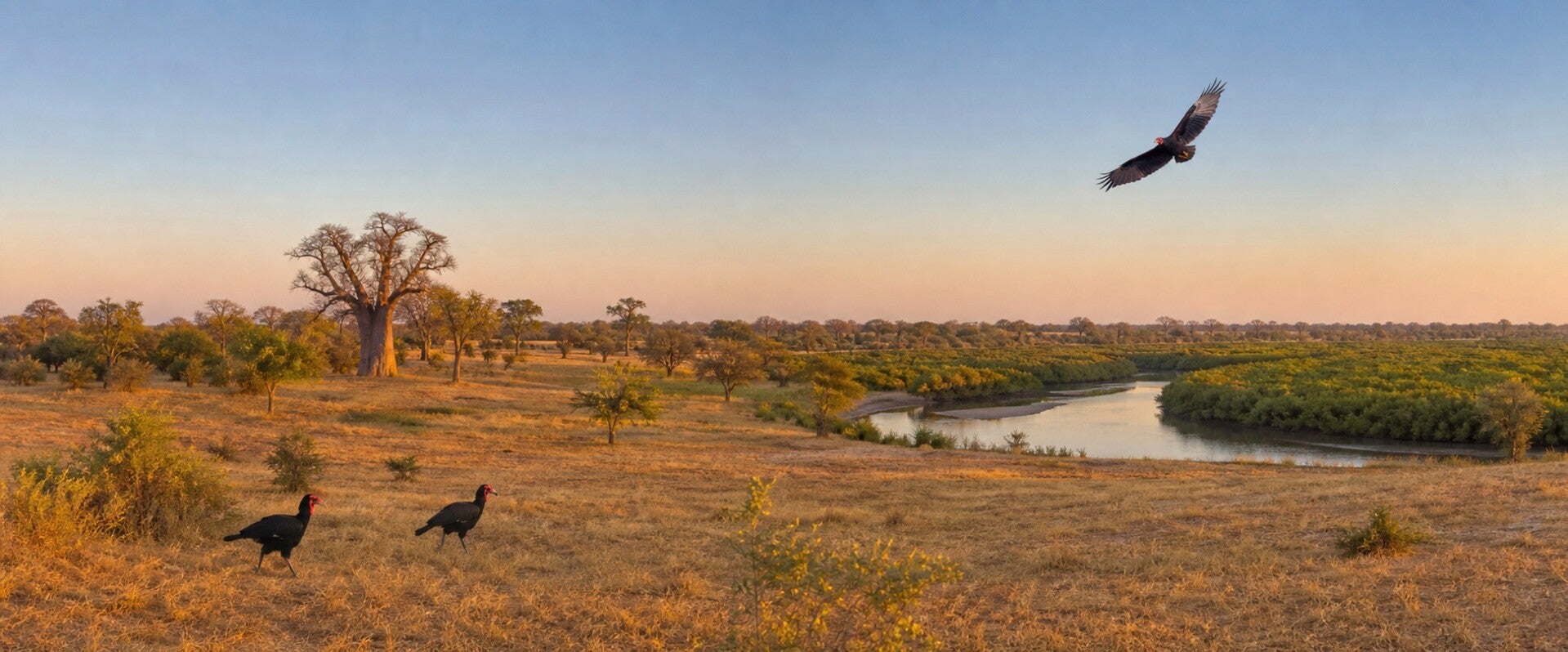
Kiang West National Park Birdwatching
Discover The Gambia’s Wild Savannah and Woodland
Explore open savannah, dry woodland, mangrove creeks and tidal flats in one of The Gambia’s most important protected areas.
Join expert local guide Lamin Jobaate for an unforgettable journey through Kiang West National Park, searching for raptors, ground hornbills, rollers, barbets and many other West African birds.
Welcome to Kiang West National Park
Kiang West National Park lies on the southern bank of the River Gambia in the country’s Lower River Region.
Established in 1987, the park protects an extensive natural landscape of Guinea savannah, dry deciduous woodland, mangrove creeks and tidal flats. Three bolons—or tidal creeks—extend into the park from the River Gambia, adding valuable wetland habitat to its woodland and grassland environment.
The park’s size, varied habitats and relatively remote setting make it an important refuge for birds and other wildlife. It offers a quieter and wilder experience than birdwatching locations near the coast.
Location: Kiang West District, Lower River Region
Distance: Approximately 145 kilometres from Banjul
Suitable for: Birdwatchers, photographers and wildlife enthusiasts
Habitats: Savannah, dry woodland, mangroves, tidal creeks and mudflats
Kiang West Highlights
-
More than 250 recorded bird species
-
Excellent opportunities for observing raptors
-
Important Sudan–Guinea savannah birdlife
-
Savannah and woodland species with restricted Gambian distributions
-
Mangrove creeks and tidal flats beside the River Gambia
-
Possible sightings of ground hornbills, rollers and barbets
-
Wildlife including baboons, monkeys, warthogs and antelope
-
Beautiful baobabs and open natural landscapes
-
Excellent opportunities for wildlife photography
-
A peaceful and uncrowded birdwatching experience
Birds You Might See at Kiang West
Kiang West is especially important for birds associated with the Sudan–Guinea savannah biome. Its creeks and riverbank also provide opportunities to encounter wetland birds and kingfishers.
Species you may encounter include:
-
Abyssinian Ground Hornbill
-
Bateleur
-
African Fish Eagle
-
Martial Eagle
-
Palm-nut Vulture
-
Blue-bellied Roller
-
Bearded Barbet
-
Senegal Parrot
-
Yellow-billed Shrike
-
Yellow Penduline Tit
-
Senegal Eremomela
-
Chestnut-crowned Sparrow-Weaver
-
Purple Glossy Starling
-
Bronze-tailed Glossy Starling
-
Red-winged Pytilia
-
Lavender Waxbill
-
Sun Lark
-
White-fronted Black Chat
-
Brown-rumped Bunting
-
Blackcap Babbler
-
Pied-winged Swallow
-
Bush Petronia
-
Grey-headed Kingfisher
-
Giant Kingfisher
-
African Darter
Sightings depend on the season, weather and natural movements of the birds. Individual species cannot be guaranteed, but Lamin’s experience will help you explore the most productive habitats.
Savannah and Woodland Birding
The open savannah and dry woodland of Kiang West provide a different birdwatching experience from The Gambia’s coastal lagoons and forest reserves.
Raptors can often be watched soaring above the landscape, while rollers, barbets, parrots, starlings and smaller woodland birds use the scattered trees and scrub. Open areas may provide opportunities to search for ground hornbills and other terrestrial species.
Lamin will listen for calls, watch for movement and guide you through the habitats most likely to produce rewarding sightings.
Mangrove Creeks and River Habitats
Kiang West is bounded by the River Gambia and divided by several tidal creeks. These waterways introduce mangrove, mudflat and riverbank habitats into the park.
The creeks may attract herons, kingfishers, African Darters, fish eagles and other water-associated birds. They also provide habitat for crocodiles, otters, mongooses and the elusive West African Manatee.
Wildlife encounters are unpredictable, particularly with secretive aquatic mammals, but the creeks add another fascinating dimension to a visit.
Wildlife at Kiang West
Kiang West is one of The Gambia’s most important wildlife refuges. In addition to its birdlife, the park supports a range of mammals and reptiles.
Wildlife that may be encountered—or whose tracks and signs may be found—includes:
-
Guinea Baboon
-
Green Monkey
-
Patas Monkey
-
Warthog
-
Bushbuck
-
Sitatunga
-
Marsh Mongoose
-
African Clawless Otter
-
Nile Crocodile
-
West African Manatee
Some species are secretive or rarely seen, and no wildlife sighting can be guaranteed.
Bird and Wildlife Photography
Kiang West offers excellent photographic opportunities, from sweeping savannah landscapes and mature baobabs to raptors in flight and colourful woodland birds.
The open habitats can provide clearer views than dense forest locations, while early and late sunlight brings warmth and texture to the grassland. The creeks offer contrasting possibilities for photographing waterbirds, mangroves and reflections.
Tours can proceed at a patient pace, allowing time to observe behaviour and photograph wildlife responsibly.
Experience Kiang West with Lamin
Exploring a large and varied park is far more rewarding with an experienced local bird guide.
Expert Local Knowledge
Lamin understands the habitats, bird calls and seasonal movements of The Gambia’s birds.
Personalised Birding
The itinerary can focus on target species, photography or a broad introduction to the park.
Small Groups
Private and small-group tours offer a relaxed experience with personal attention.
Responsible Wildlife Watching
Birds, animals and sensitive habitats are approached carefully and respectfully.
Flexible Itineraries
Kiang West can be included in a longer inland journey or combined with Tendaba and other River Gambia birding locations.
Best Time to Visit Kiang West
Kiang West can be visited throughout the year, although the dry season from approximately November to April is generally the most convenient period.
During these months, travel conditions are usually easier, temperatures are more comfortable in the morning and migratory birds supplement the resident species. Raptors can be particularly rewarding during the dry season.
The green season transforms the landscape with fresh vegetation, dramatic skies and breeding activity, but rain may affect road conditions and access.
Early morning and late afternoon usually offer the best combination of bird activity, comfortable temperatures and photographic light.
Planning Your Visit
Kiang West is considerably farther inland than Kotu Creek, Abuko or Tanji. It is best treated as part of a carefully planned inland tour rather than a short coastal excursion.
Depending on your starting point and itinerary, Lamin can advise on:
-
Transport arrangements
-
Departure time
-
Accommodation
-
Food and drinking water
-
Suitable clothing
-
Current road and access conditions
-
Combining Kiang West with Tendaba
Allowing sufficient time makes it possible to explore the park at a relaxed pace and visit several habitats.
What to Bring
For a comfortable visit, consider bringing:
-
Binoculars
-
Camera and spare batteries
-
Lightweight, neutral-coloured clothing
-
Comfortable closed walking shoes
-
Hat and sun protection
-
Plenty of drinking water
-
Insect repellent
-
A lightweight waterproof jacket during the green season
A spotting scope can be particularly useful for observing distant raptors and birds across open habitats.
Combine Kiang West with Tendaba
Kiang West combines especially well with a stay at Tendaba on the River Gambia.
Together, the two locations provide access to:
-
Savannah and dry woodland
-
Mangrove creeks
-
River and wetland habitats
-
Raptors and woodland birds
-
Kingfishers, herons and other waterbirds
-
Boat-based and land-based birdwatching
A combined itinerary offers a much broader experience of inland Gambian birdlife than a single-day coastal excursion.
Ready to Explore Kiang West?
Journey into one of The Gambia’s most important natural areas with expert local guide Lamin Jobaate.
Whether you are searching for special savannah birds, hoping to photograph raptors or looking for a quieter wildlife experience away from the coast, your tour will be planned around your interests.