

Field Notes by Lamin Jobaate
Location: The Gambia
Observation period: July–September
Species: White-billed Buffalo-Weaver (Bubalornis albirostris)
Species Summary
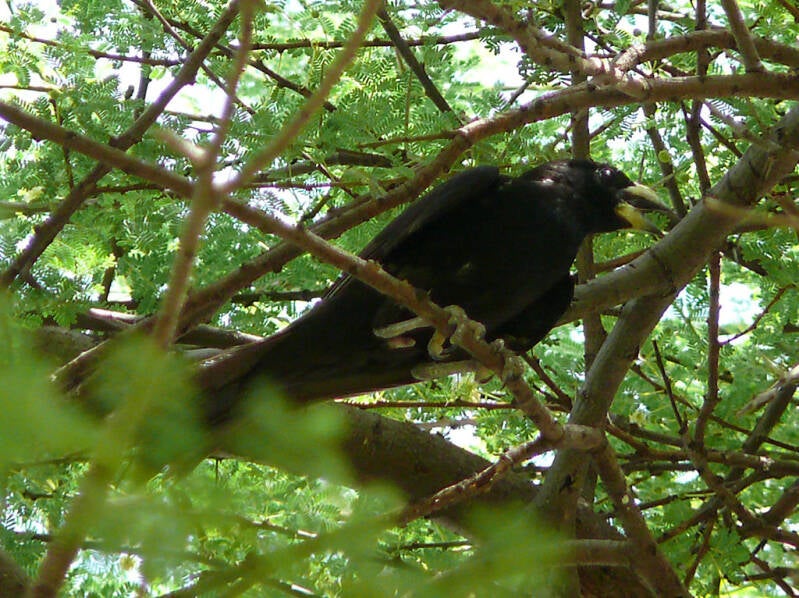
The White-billed Buffalo-Weaver is a large, noisy and highly social weaver commonly found in The Gambia.
One of the most distinctive features of the species is its remarkable nesting behaviour. White-billed Buffalo-Weavers construct large communal nests in trees, with many individual nest chambers built together. A single tree can sometimes contain more than 100 nest chambers, creating a huge structure that can resemble a haystack when viewed from a distance.
White-billed Buffalo-Weaver (Bubalornis albirostris)
Observation 1 – Wulungkama Garage Area
The first nesting site was in a large exotic tree situated within an open compound. The tree had a full covering of leaves and was surrounded by areas of tall grass.
I counted approximately 40 active nests, representing a substantial social breeding colony.
Resources were abundant around the site. Birds were observed daily collecting green grasses and dry sticks from a nearby leafless Acacia tree and carrying them back to the nesting colony.
The large leafy nesting tree, surrounding vegetation, plentiful nesting material and good shelter appeared to provide particularly favourable conditions for the birds.
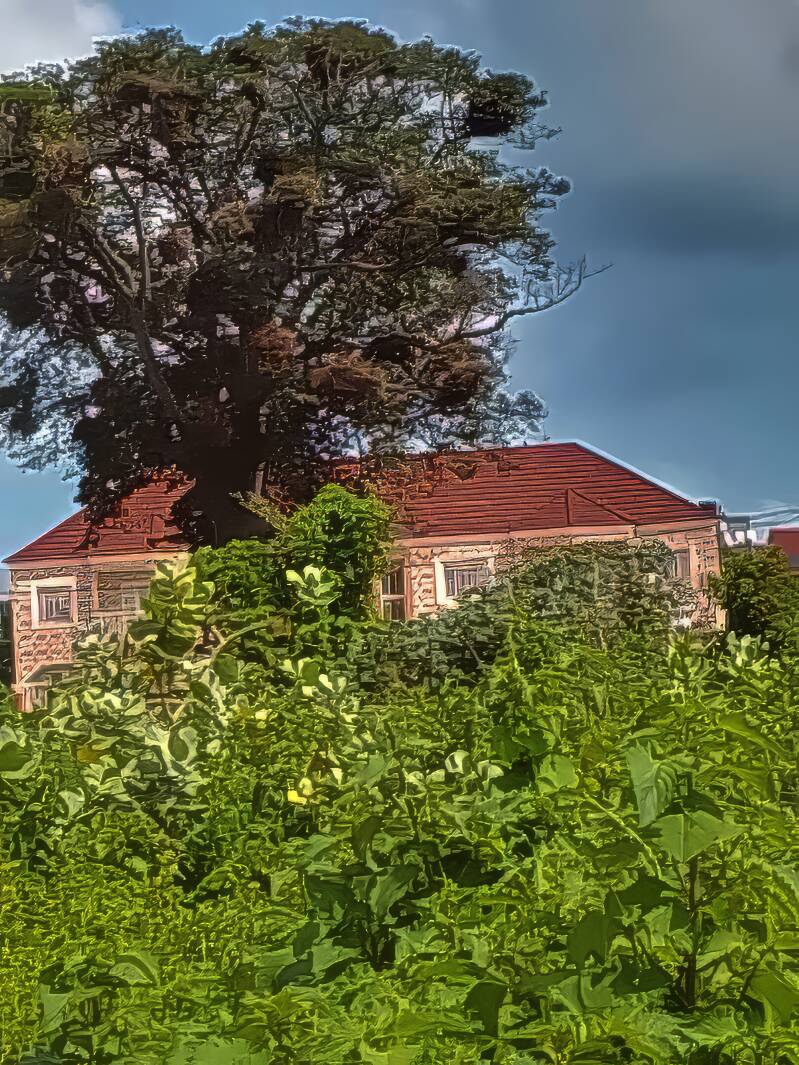
White-billed Buffalo-Weaver nesting habitat.
Observation 2 – Near the Senegambia Highway
The second nesting site was noticeably different.
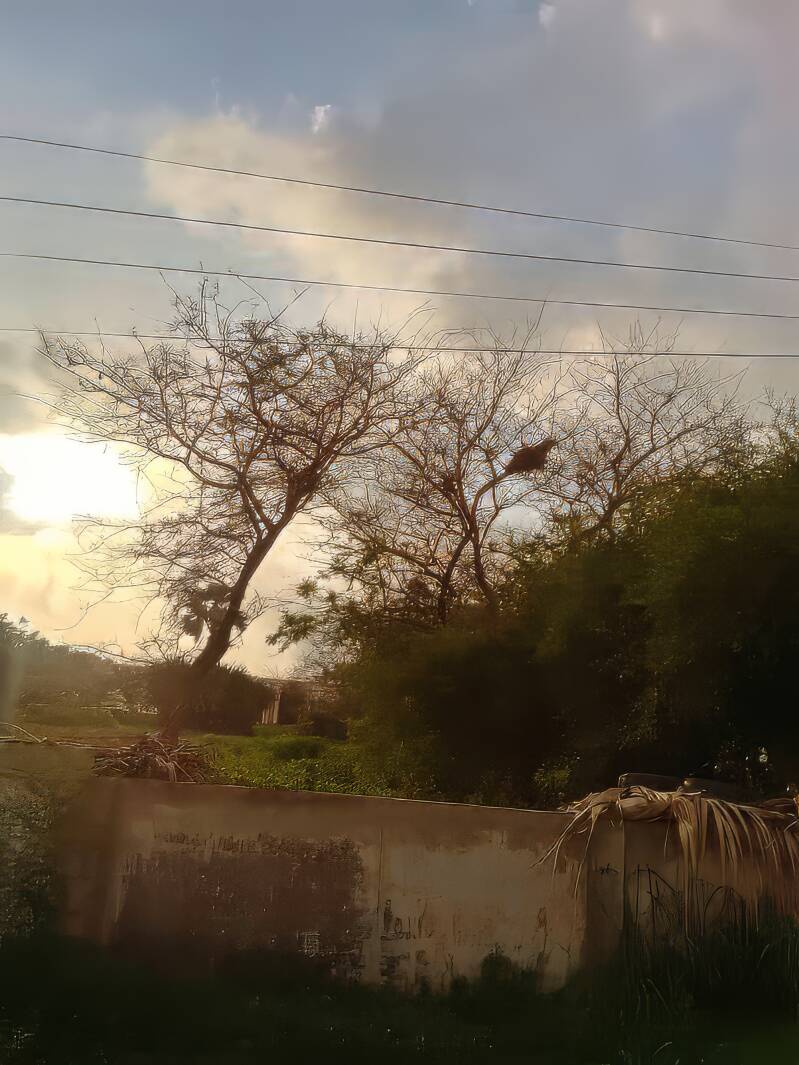
Here, the birds were using a medium-sized Acacia tree with no leaves. The tree was situated in an open compound surrounded mainly by short grasses.
Only four active or inactive nests were counted.
Birds were still observed moving around the site and collecting nesting materials, but their activity was noticeably lower than at the Wulungkama site.
Comparing the Two Colonies
The difference between the two sites was striking.
At Wulungkama, approximately 40 active nests were recorded in a large, leafy tree with abundant surrounding resources. At the second site, only four active or inactive nests were found in a smaller, bare Acacia tree.
My observations suggest that the size of White-billed Buffalo-Weaver breeding colonies may be influenced by several factors, including the availability of food and nesting materials, shelter, surrounding vegetation and suitable tree cover.
Further monitoring of additional colonies would help us better understand the importance of each of these factors.
Conservation Significance
These observations highlight the importance of conserving mature trees and surrounding vegetation, even within developed and open areas.
Protecting existing large trees and planting more suitable trees could provide valuable nesting habitat for White-billed Buffalo-Weavers and many other bird species.
Maintaining natural vegetation and sources of nesting material around these sites may also help support successful breeding colonies.
For me, observations like these demonstrate why protecting apparently ordinary trees and patches of vegetation can be important for the conservation of The Gambia’s birdlife.
Ornithologist, Conservationist & Bird Guide
West African Birding
Add comment
Comments